

Understanding RESTful APIs

Understanding RESTful APIs is crucial before diving into Laravel. REST (Representational State Transfer) is an architectural style that provides a set of principles for designing networked applications. By grasping the fundamentals of REST, including concepts like statelessness, resource identification, and hypermedia, you’ll be able to design and build APIs that adhere to industry best practices. Additionally, learning about the benefits of RESTful APIs, such as scalability, simplicity, and interoperability, will help you appreciate why it has become the de facto standard for web services.
Setting up Laravel
Setting up Laravel correctly is essential for a smooth API development experience. We’ll guide you through the installation process, which involves using Composer, a dependency management tool for PHP. Once Laravel is installed, we’ll walk you through the initial configuration steps, such as database connection settings, environment variables, and other essential configurations. By properly setting up Laravel, you’ll ensure a solid foundation for building your RESTful APIs.
Designing API Endpoints
Designing API endpoints involves careful planning and consideration. You’ll learn how to identify resources and determine the appropriate endpoints for your API. We’ll cover strategies for mapping HTTP methods (GET, POST, PUT, DELETE) to CRUD (Create, Read, Update, Delete) operations on resources. Additionally, we’ll explore URI design and naming conventions, which play a vital role in creating a consistent and intuitive API structure. Lastly, we’ll discuss authentication and authorization mechanisms to protect your API endpoints and restrict access to authorized users or roles.
Building API Controllers

API controllers are at the core of your API’s logic and functionality. We’ll explain the process of creating controllers in Laravel, which involves creating a dedicated directory for API controllers and implementing methods to handle different HTTP requests. You’ll discover how to implement CRUD operations in your controllers, leveraging Laravel’s expressive syntax and powerful query builder. We’ll also cover request validation to ensure the integrity and validity of incoming data, as well as handling responses in various formats such as JSON or XML. By mastering API controllers, you’ll have full control over how your API handles incoming requests and generates appropriate responses.
Database Integration
Integrating your API with a database is a crucial aspect of building RESTful APIs. Laravel provides seamless integration with various databases, including MySQL, PostgreSQL, and SQLite, among others. We’ll guide you through the process of configuring database connections in Laravel’s configuration files, allowing your API to connect to the appropriate database. You’ll learn how to define and migrate database tables using Laravel’s migration system, ensuring your database schema stays in sync with your codebase. Additionally, we’ll explore Eloquent ORM, Laravel’s intuitive and expressive object-relational mapping tool, enabling you to perform database operations using a fluent and expressive syntax. Understanding how to establish relationships between database tables, such as one-to-one, one-to-many, or many-to-many, will help you model your API’s data effectively.
Request and Response Handling
Request and response handling are fundamental to building a well-designed and efficient API. You’ll learn how to parse and process incoming requests, extracting data and parameters required for processing. We’ll explore different techniques for transforming and formatting responses, ensuring they adhere to industry standards and best practices. To streamline your API’s error handling, we’ll discuss how to handle exceptions and generate appropriate error responses, including HTTP status codes and error messages. Additionally, we’ll cover advanced concepts such as versioning your API to support backward compatibility and content negotiation to allow clients to request specific response formats.
Authentication and Authorization
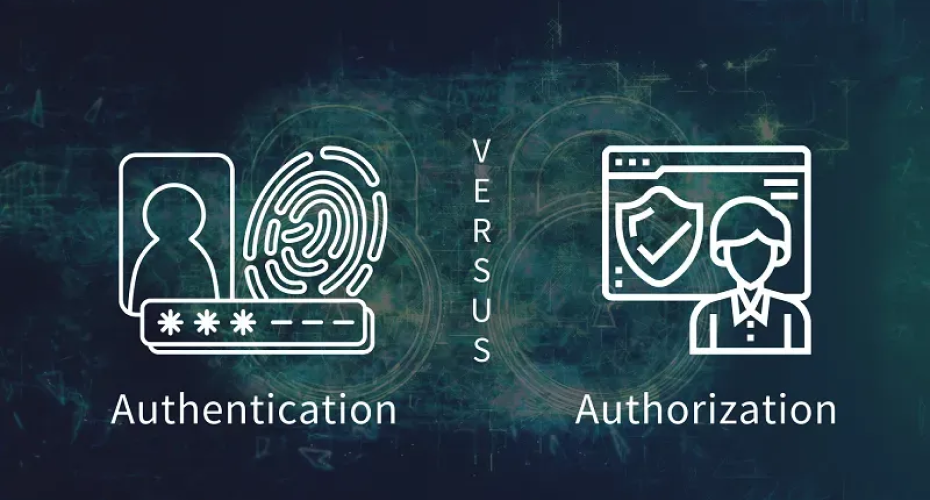
Securing your API is paramount to protect your users’ data and ensure that only authorized individuals or systems can access certain resources. In this section, we’ll delve deeper into authentication and authorization mechanisms for your Laravel API. You’ll learn about token-based authentication, which involves generating and validating tokens to authenticate API requests. We’ll explore Laravel Passport, a powerful OAuth2 server implementation, that simplifies the process of issuing API tokens and managing access tokens. Additionally, we’ll cover role-based access control (RBAC), allowing you to define roles and permissions to restrict access to specific API endpoints based on user roles. You can guarantee the safety and confidentiality of your API by putting strong authentication and permission procedures in place.
Testing APIs
Testing your APIs is crucial to ensure their functionality, reliability, and stability. Laravel provides a comprehensive testing suite that allows you to write unit tests for your API endpoints. We’ll guide you through the process of setting up test cases, making HTTP requests to your API, and asserting the expected responses. By following a test-driven development (TDD) approach, where tests are written before the actual implementation, you can ensure that your API behaves as expected and detect any regressions early on. Additionally, we’ll discuss API documentation and how tools like Laravel Dusk can help you generate documentation automatically from your tests, making it easier for other developers to understand and consume your API.
Optimizing Performance

Optimizing the performance of your RESTful APIs is crucial for delivering a fast and efficient user experience. We’ll explore various techniques and strategies to optimize your API’s performance. Caching responses, both at the server and client levels, can significantly reduce the number of database queries and improve response times. We’ll cover techniques for caching responses using Laravel’s caching mechanisms. Additionally, we’ll dive into optimizing database queries, leveraging Eloquent’s query builder methods to retrieve only the required data and reduce the overall query load. We’ll discuss implementing rate limiting to protect your API from abuse and ensure fair usage by limiting the number of requests from a single client within a specific time frame. Lastly, we’ll explore techniques for handling pagination and eager loading to efficiently retrieve and manipulate large sets of data.
API Documentation
Comprehensive and well-structured API documentation is essential for developers who consume your API. We’ll explore different approaches and tools for generating API documentation. Swagger, a popular open-source tool, provides a specification format (OpenAPI) that allows you to document your API endpoints, parameters, responses, and authentication mechanisms. We’ll guide you through integrating Swagger into your Laravel API project and automating the documentation generation process. We’ll also cover best practices for documenting API endpoints, including providing clear descriptions, example requests and responses, and outlining any authentication requirements. By documenting your API effectively, you’ll enhance its usability and reduce the barrier for other developers to integrate and interact with your API.
Deployment and Production Considerations
Preparing your API for production requires careful consideration of various factors. We’ll discuss the process of deploying your Laravel API to a production environment, including configuring server environments, setting up appropriate file permissions, and optimizing the server for performance. We’ll explore containerization using Docker, a popular containerization platform, to create portable and reproducible environments for your API. Additionally, we’ll cover best practices for securing your API by implementing HTTPS encryption using SSL/TLS certificates. Lastly, we’ll touch upon scaling strategies and load-balancing considerations to handle increasing traffic and ensure high availability for your API.
RIVO AGENCY: Your Trusted Laravel Professionals
Are you in search of highly skilled and reliable Laravel professionals to build your next web project? Look no further than RIVO AGENCY! We are a team of dedicated Laravel experts who excel in creating robust, scalable, and high-performing web applications using the Laravel framework.
Why choose RIVO AGENCY as your Laravel professionals? Here’s what sets us apart:
- Extensive Laravel Expertise: Our team consists of seasoned Laravel developers with years of experience under their belts. We have successfully delivered numerous Laravel projects, ranging from small-scale applications to enterprise-level systems. Our in-depth knowledge of the framework allows us to tackle any complexity and deliver exceptional results.
- Tailored Solutions: At RIVO AGENCY, we believe in understanding the unique requirements of each client. We take the time to listen to your needs, analyze your business objectives, and craft tailor-made solutions that perfectly align with your goals. Our attention to detail ensures that your Laravel project is precisely tailored to your specific requirements.
- Clean and Maintainable Code: We adhere to best practices and coding standards while developing Laravel applications. Our developers follow a structured approach, writing clean, efficient, and maintainable code. This not only ensures the reliability and stability of your application but also makes it easier to maintain and scale as your business grows.
- API Development Excellence: Building RESTful APIs with Laravel is our forte. We have extensive experience in designing and developing APIs that are secure, scalable, and adhere to industry standards. Whether you need an API for mobile applications, third-party integrations, or microservices architecture, we have the expertise to deliver seamless API solutions.
- Quality Assurance and Testing: We take quality seriously. Our dedicated QA team rigorously tests every aspect of your Laravel project to identify and rectify any bugs or issues. We ensure that your application functions flawlessly across different browsers, devices, and user scenarios. Our commitment to quality guarantees a smooth user experience for your customers.
- Timely Delivery: We understand the importance of meeting deadlines. When you choose RIVO AGENCY as your Laravel professionals, you can rest assured that your project will be delivered on time. We follow a well-defined development process, effective project management, and transparent communication to ensure timely delivery without compromising quality.
- Ongoing Support and Maintenance: Our relationship doesn’t end with project delivery. We provide comprehensive post-launch support and maintenance services to ensure your Laravel application continues to operate at its best. From troubleshooting issues to implementing updates and enhancements, we’re here to support your ongoing success.
Choose RIVO AGENCY as your Laravel professionals and experience the difference of working with a dedicated team of experts who are passionate about delivering exceptional Laravel solutions. Let us transform your vision into a reality. Get in touch with us today to discuss your Laravel project requirements and take the first step toward success!
Conclusion
Building RESTful APIs with Laravel requires a systematic approach, from understanding REST principles to implementing robust authentication, optimizing performance, and deploying to production. By following this comprehensive guide, you’ll gain a solid understanding of the key aspects involved in building RESTful APIs with Laravel.

Don't want to miss anything?
Get weekly updates on the newest design stories, case studies and tips right in your mailbox.
